Four Key Elements Of Proper Flossing
Gum disease begins at the gum line and between teeth. Daily flossing is an important part of your oral health care routine to help remove the plaque from these areas where a toothbrush doesn’t completely reach. But to truly reap the benefits, you need to use proper flossing technique.
The American Dental Hygienists’ Association explains the key elements of proper flossing technique in four simple steps:
1.Wind: Wind 18 inches of floss around middle fingers of each hand. Pinch floss between thumbs and index fingers, leaving a one- to two-inch length in between. Use thumbs to direct floss between upper teeth.
2.Guide: Keep a one- to two-inch length of floss taut between fingers. Use index fingers to guide floss between contacts of the lower teeth.
3.Glide: Gently guide floss between the teeth by using a zig-zag motion. DO NOT SNAP FLOSS BETWEEN YOUR TEETH. Contour floss around the side of the tooth.
4.Slide: Slide floss up and down against the tooth surface and under the gum line. Floss each tooth thoroughly with a clean section of floss.
This technique applies to any type of floss: waxed, unwaxed, spongy floss or dental tape. It doesn’t matter whether you start with your upper or lower teeth, or whether you start in the front or the back. Just make sure that you floss all your teeth, including the back side of the very last tooth on the left, right, top and bottom of your mouth. And don’t forget to floss under the gum line and along the sides of teeth that border any spaces where teeth are missing -- food particles can become trapped in these spaces, too.
Using a Flosser
If you use a hand-held flosser, the flossing technique is similar. Hold the flosser handle firmly and point the flossing tip at an angle facing the area you want to floss first (either top teeth or bottom teeth). Guide the floss gently between two teeth, and be sure to avoid snapping or popping the floss. Use the same zigzag motion that you would us with standard floss. Bend the floss around each tooth and slide it under the gum line and along each tooth surface.
Using an Electric Flosser
The same basic flossing techniques apply if you choose an electric flosser. Guide the floss gently into place and move the flosser back and forth to create a zigzag motion with the floss. Do you have trouble reaching the back sides of the back teeth? Some flossers have angled handles that make it easier to reach those tricky spots.
Flossing Around Dental Work
If you wear braces or other dental appliances, proper flossing technique is especially important to avoid getting floss caught on wires or brackets. You can use special orthodontic floss, such as Oral-B Super Floss®, which has a stiff end that can be easily threaded under the main wire (also called the arch wire) on your braces. Or you can purchase a floss threader, which is a flexible device with a pick on one end and a loop on the other. To use a floss threader, place an 18-inch piece of the floss of your choice through the loop. Then insert the pointed end of the flosser under the main wire and pull through so the floss is under the main wire. Once you have the floss in place, follow the same principles of proper flossing technique that you would use with standard floss.
Being Gentle
Poor flossing technique can result in complications, and it's important to be thorough yet gentle, especially when flossing with an electric flosser. Be sure you understand how to use it. You can always ask your dentist or dental hygienist to show you if you are uncertain.
Saturday, June 18, 2011

Sunday, June 12, 2011
cost of root canal abroad
Root Canal Treatment in UK ???What
would you like to ask? I am an NHS dental patient, in the UK yr
2011. I have just had an abscess under a
crowned tooth which has previously had
root canal treatment just the once. My
dentist infromed me that my options now
are to have the tooth extracted or pay £700 privately to them to carry out a
second root canal. I dont want to lose my
tooth and dont see why I should have to
just because I dont have £700 spare cash
to pay for this. I also dont understand why
they are saying I have to have this done privately at a cost of £700 when I am NHS
Exempt and should get this done on the
NHS. I wouldnt mind if they would pay the
NHS price for root canal of which I am
entitled to and me pay the difference of
which I would be more willing. I dont know who to contact about this or how to
find out if they can do this or not ???? Asked by Carrie C - 14 hours ago - 3 days left to answer. - Open Question: Report Abuse
would you like to ask? I am an NHS dental patient, in the UK yr
2011. I have just had an abscess under a
crowned tooth which has previously had
root canal treatment just the once. My
dentist infromed me that my options now
are to have the tooth extracted or pay £700 privately to them to carry out a
second root canal. I dont want to lose my
tooth and dont see why I should have to
just because I dont have £700 spare cash
to pay for this. I also dont understand why
they are saying I have to have this done privately at a cost of £700 when I am NHS
Exempt and should get this done on the
NHS. I wouldnt mind if they would pay the
NHS price for root canal of which I am
entitled to and me pay the difference of
which I would be more willing. I dont know who to contact about this or how to
find out if they can do this or not ???? Asked by Carrie C - 14 hours ago - 3 days left to answer. - Open Question: Report Abuse
Monday, May 30, 2011
tootharena:Contemplating getting Braces???
Contemplating getting Braces???
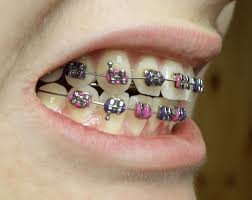
Scheduled to receive braces in the future? Whether you have already scheduled with an orthodontist or you need help determining which orthodontic method would best
satisfy your orthodontic needs, you most likely
have a few concerns or questions regarding the
approach of this orthodontic treatment. As soon as you understand what is to be expected in regards
to your treatment as well as how to properly take
care of your pearly whites, you can lessen any
uncertainties or misgivings you have concerning
the treatment. When you have questions or
concerns about your orthodontic procedure, you should always talk to an skilled orthodontist for
professional guidance. Do Braces Hurt One of the most frequently asked questions people
ask prior to undergoing treatment is, “Do braces hurt?” Every individual will respond differently in regards to orthodontic treatment, but it is very
important to consult with your orthodontist
regarding options for minimizing discomfort. When
all is said and done, the rewards of orthodontic
treatment far outweigh the discomfort that you may
experience. When you first obtain your braces or right after receiving some adjustments, your jaw
may be a little sore. Over the counter pain relievers
can really help minimize the soreness as necessary.
Luckily, almost all braces today are made less bulky
and smaller which means treatment should be
more pleasant and discreet than old fashioned braces. Your orthodontist will work with you to
provide the most pain free experience possible. Caring for Braces After you get your orthodontic appliances, your
orthodontist will certainly make sure that you’re equipped and prepared to take care of your teeth,
gums and braces. Brushing and flossing are even
more important than ever for people with braces,
so you are going to want to make sure that you
have the proper upkeep tools to help you maintain
proper oral health. You may also wish to avoid particular foods while in the process of your
treatment, which include nuts, popcorn, corn on
the cob, hard candies, gum, and other sticky candies. Chewy and hard foods can easily damage
the braces and loosen bands. The closer you follow
these guideline, the less disruptions you will
experience during the treatment – and that means you will obtain your new, wonderful smile on
schedule. Extraordinary Dental Attention Food particles and tartar can become easily stuck in
the small gaps between the wires and brackets
which lead to enamel stains and tooth decay.
Flossing and brushing become a lot more
necessary when you are going through
orthodontic treatment. If at all possible, brush following every meal to remove trapped food
particles, and floss at least once a day with special
orthodontic floss. If you don’t have a toothbrush on you, rinse your mouth to cleanse your braces of
food debris. An experienced orthodontist can
demonstrate the appropriate techniques for
cleaning and caring for your teeth during your
orthodontic treatment. You should definitely ask
about special cleaning devices that will make cleaning around your wires less difficult and much
more efficient. If your appointment to have your braces placed on
is approaching, I hope you feel more relaxed in
regards to the treatment. If you have not yet made
an appointment with an orthodontist, think about
consulting with one before you make any
decisions.
Scheduled to receive braces in the future? Whether you have already scheduled with an orthodontist or you need help determining which orthodontic method would best
satisfy your orthodontic needs, you most likely
have a few concerns or questions regarding the
approach of this orthodontic treatment. As soon as you understand what is to be expected in regards
to your treatment as well as how to properly take
care of your pearly whites, you can lessen any
uncertainties or misgivings you have concerning
the treatment. When you have questions or
concerns about your orthodontic procedure, you should always talk to an skilled orthodontist for
professional guidance. Do Braces Hurt One of the most frequently asked questions people
ask prior to undergoing treatment is, “Do braces hurt?” Every individual will respond differently in regards to orthodontic treatment, but it is very
important to consult with your orthodontist
regarding options for minimizing discomfort. When
all is said and done, the rewards of orthodontic
treatment far outweigh the discomfort that you may
experience. When you first obtain your braces or right after receiving some adjustments, your jaw
may be a little sore. Over the counter pain relievers
can really help minimize the soreness as necessary.
Luckily, almost all braces today are made less bulky
and smaller which means treatment should be
more pleasant and discreet than old fashioned braces. Your orthodontist will work with you to
provide the most pain free experience possible. Caring for Braces After you get your orthodontic appliances, your
orthodontist will certainly make sure that you’re equipped and prepared to take care of your teeth,
gums and braces. Brushing and flossing are even
more important than ever for people with braces,
so you are going to want to make sure that you
have the proper upkeep tools to help you maintain
proper oral health. You may also wish to avoid particular foods while in the process of your
treatment, which include nuts, popcorn, corn on
the cob, hard candies, gum, and other sticky candies. Chewy and hard foods can easily damage
the braces and loosen bands. The closer you follow
these guideline, the less disruptions you will
experience during the treatment – and that means you will obtain your new, wonderful smile on
schedule. Extraordinary Dental Attention Food particles and tartar can become easily stuck in
the small gaps between the wires and brackets
which lead to enamel stains and tooth decay.
Flossing and brushing become a lot more
necessary when you are going through
orthodontic treatment. If at all possible, brush following every meal to remove trapped food
particles, and floss at least once a day with special
orthodontic floss. If you don’t have a toothbrush on you, rinse your mouth to cleanse your braces of
food debris. An experienced orthodontist can
demonstrate the appropriate techniques for
cleaning and caring for your teeth during your
orthodontic treatment. You should definitely ask
about special cleaning devices that will make cleaning around your wires less difficult and much
more efficient. If your appointment to have your braces placed on
is approaching, I hope you feel more relaxed in
regards to the treatment. If you have not yet made
an appointment with an orthodontist, think about
consulting with one before you make any
decisions.
oral surgery papers
ORAL & MAXILLOFACIAL SURGERY - APRIL-2006
Part-A
1. Write the clinical features, etiology and management of Ludwig’s Angina and note on systemic
complications=9m
2. Write short notes: 4 x 4 ; a)Local anaesthetic agent pharmacology b)Inferior Alveolar Block-Not aching
c) Haemophilia patient for Dental extraction d) Chronic osteomyelitis of Mandible
3. Write briefly on: 5 x 2 =10m; a) Healing of Extraction wound b) Alveolopathy
c) Impacted Tooth d) Implants e) Gaseous Anaesthetic agent
Part-B
4. Write about facial proportions and note about class II and III prognathism and method to plan treatment by
Orthognatic surgery=9m
5. Write short notes on: 4 x 4 =16m; a) Open Cap Splint Osteosynthesis
b) Champy’s Osteosynthesis line for monocortical plating c) Blow out fracture of orbit
d) Premalignant conditions
6. Write briefly on: 5 x 2 =10m; a) Residual cyst b) Adenocarcinoma for minor salivary gland in palate
c) Radiotherapy for oral carcinoma d) Apert’s syndrome e) Implant supported prosthesis
OCT./NOV.2005
Part-A
1. Discuss in detail indications, contra-indications, principles followed in Dental extraction of teeth. Note on
complication =9m
2. Write short notes on: 4 x 4 =16m; a) General Anaesthesia vs.Local Anaesthesia
b) Posterior superior alveolar nerve block Anaesthesia c) Analgesics for oro-facial pain d) Dry socket
3. Write briefly on: 5 x 2 =10marks; a) Syncope b) Prophylactic antibiotic therapy
c) Masticatory space infection d) Suturing e) Biopsy
Part-B
4. Write the clinical feature and treatment of Le Fort III fractures of Midface=9m
5. Write short notes on: 4 x 4 =a) Gunning splint b) Trigeminal Neuralgia c) Subluxation d) Sialadenitis
6. Write briefly on: 5 x 2 =10marks; a) Mucocele b) Staging of tumour c) Odontogenic Keratocyst
d) Cleft lip and palate protocol e) Inter positional arthroplasty
MAR/APR.2005
Part-A
1. Discuss about pharmacology, composition and indication for use of local anaesthetic agent. Write a note on
complications of inferior alveolar nerve block anaesthesia =
Part-A
1. Write the clinical features, etiology and management of Ludwig’s Angina and note on systemic
complications=9m
2. Write short notes: 4 x 4 ; a)Local anaesthetic agent pharmacology b)Inferior Alveolar Block-Not aching
c) Haemophilia patient for Dental extraction d) Chronic osteomyelitis of Mandible
3. Write briefly on: 5 x 2 =10m; a) Healing of Extraction wound b) Alveolopathy
c) Impacted Tooth d) Implants e) Gaseous Anaesthetic agent
Part-B
4. Write about facial proportions and note about class II and III prognathism and method to plan treatment by
Orthognatic surgery=9m
5. Write short notes on: 4 x 4 =16m; a) Open Cap Splint Osteosynthesis
b) Champy’s Osteosynthesis line for monocortical plating c) Blow out fracture of orbit
d) Premalignant conditions
6. Write briefly on: 5 x 2 =10m; a) Residual cyst b) Adenocarcinoma for minor salivary gland in palate
c) Radiotherapy for oral carcinoma d) Apert’s syndrome e) Implant supported prosthesis
OCT./NOV.2005
Part-A
1. Discuss in detail indications, contra-indications, principles followed in Dental extraction of teeth. Note on
complication =9m
2. Write short notes on: 4 x 4 =16m; a) General Anaesthesia vs.Local Anaesthesia
b) Posterior superior alveolar nerve block Anaesthesia c) Analgesics for oro-facial pain d) Dry socket
3. Write briefly on: 5 x 2 =10marks; a) Syncope b) Prophylactic antibiotic therapy
c) Masticatory space infection d) Suturing e) Biopsy
Part-B
4. Write the clinical feature and treatment of Le Fort III fractures of Midface=9m
5. Write short notes on: 4 x 4 =a) Gunning splint b) Trigeminal Neuralgia c) Subluxation d) Sialadenitis
6. Write briefly on: 5 x 2 =10marks; a) Mucocele b) Staging of tumour c) Odontogenic Keratocyst
d) Cleft lip and palate protocol e) Inter positional arthroplasty
MAR/APR.2005
Part-A
1. Discuss about pharmacology, composition and indication for use of local anaesthetic agent. Write a note on
complications of inferior alveolar nerve block anaesthesia =
Tuesday, May 17, 2011
Saturday, May 14, 2011
tootharena: how hygeine helps in orthodontic treatment
How hygienists can provide support for the
movement by Ann-Marie C. DePalma, CDA, RDH, MEd, FAADH As defined by Wilkins, orthodontics is the area of
dentistry concerned with the diagnosis,
supervision, guidance, and treatment of the
growing and mature dentofacial structures – including conditions that require movement of the
teeth – and the treatment of malrelationships and malformations of the craniofacial complex. As dental hygienists, we are familiar with Dr.
Edward Angle's classifications of occlusal
relationships. Dr. Angle is considered the "father of
modern orthodontics," who designed a
classification system in the late 1890s to early
1900s based on the first molar as the key to occlusion. As a review, normal occlusion is
considered when the mesiobuccal cusp of the
maxillary first molar occludes with the buccal
groove of the mandibular first molar. Deviations
from this norm are considered malocclusions. Class I malocculsion has normal molar relationships
present, but other teeth may be crowded, rotated,
or have excess spacing. In Class II malocclusion,
the maxillary first molar is forward of the normal
molar relationship so that the mesiobuccal cusp of
the maxillary first molar is mesial to the buccal groove of the mandibular first molar. Class II
malocclusions are further divided into Division 1
and Division 2. With Division 1, the maxillary
incisors are protruding, while in Division 2 the
maxillary central incisors retrude and the lateral
incisors protrude. Class III malocclusions present with the mesiobuccal cusp of the maxillary first
molar distal to the buccal groove of the mandibular
first molar. Additionally, occlusal discrepancies
including anterior or posterior open bites,
increased overbite and overjet, crossbites, and
diastemas may be present. Hereditary, acquired, or habitual factors are also
involved. Teeth that are in malocclusion are hard to
clean and maintain and can lead to periodontal
disease, caries, or tooth loss. Orthodontic problems
can cause abnormal wear patterns, speech and
chewing difficulties, and possible temporomandibular joint disturbances. The
American Academy of Orthodontics recommends
that every child receive an orthodontic evaluation
by age seven. Early interventional treatments use
the patient's growth and development and can
make any corrective treatment faster and easier. Adults can also receive orthodontic treatment, and
there are a variety of treatment options available.
This article reviews the basics of orthodontic
treatment and investigates current alternate
modalities. What causes tooth movement? Orthodontic tooth movement is the result of
pressure applied to the teeth by orthodontic
appliances. The pressure is transmitted down the
clinical crown to the root and periodontal ligament
and alveolar bone. Slow, continuous forces work
best, while excessive forces destroy the periodontium and may cause root resorption. Basic
orthodontic concepts involve pressure exerted on
the tooth in the direction of desired movement,
which squeezes the periodontal ligament and
results in compression. The bone surface
contacting the ligament begins to resorb due to the activation of osteoclasts. On the opposite side of the movement, the
periodontal ligament is stretched and activation of
osteoblasts occurs. The osteoblasts create new
alveolar bone where the tooth was once located.
Once active pressure and movement is stopped, the
bone regenerates and fills in the area, allowing the tooth to become secure and the periodontal
ligament to reattach normally. Orthodontic
appliances are designed to create this movement
and can be removable or fixed, placed buccally,
lingually or both, and can be metal, ceramic, or
plastic. The patient's clinical situation and needs, along with the orthodontist's preferences,
determine type(s) of appliances. Advancements in treatment Over the past few decades, advancements in
technology have contributed to a variety of new
materials and techniques in orthodontic care. Many
of the new materials make it easier for patients and
professionals to maintain healthy gingiva and tooth
structure during orthodontic treatment. NASA has been instrumental in these
developments, including the development of heat-
activated nickel titanium alloy wires and plastics. At
room temperature, NiTi (nickel titanium) wires are
very flexible. As they warm to body temperature,
they become active and move teeth to the shape of the wire. These wires maintain their shape for
extended periods of time. One new technology system involves the self-
ligating bracket. Several companies, including
Ormco (Damon System), Dentsply GAC (In-Ovation),
3M Unitek (Smartclips), and Ortho Organizers
(Carriere System) use these self-ligating
attachments. Self-ligating braces and brackets use a permanently installed moveable component that
entraps the archwire. Self-ligators are often referred
to as "speed braces." Self-ligating bands and
brackets eliminate the need for plastic ties or wire
ligatures to hold the archwire in place. Traditional
ligatures tend to become bioflim traps, thus complicating treatment. Manufacturers of self-
ligating bands and brackets claim that there is less
friction between the arch wire and bracket, they
require less frequent office visits, and they are
easier to clean and more comfortable for patients
than traditional bands and brackets. Manufacturers produce both metal and ceramic
(clear) models depending on the patient's needs
and clinician's preferences. Treatment time,
outcome, and patient satisfaction have been rated
higher than traditional brackets and bands through
various product manufacturers. Another innovation in orthodontics is the use of
removable aligners, including Invisalign (Align
Technologies), ClearCorrect (ClearCorrect, Inc.),
Triple Play (Ortho Organizers, Inc.), and Simpli5
(AOA Orthodontic Laboratory). In preparing these
aligners, each manufacturer has proprietary software that provides patient-specific case
planning. The results of the data obtained via
impressions, photographs, and other information
determines how many aligners (trays) are made on
a case specific basis (each manufacturer may
require different orthodontic records to be sent). Movement occurs through the series of trays
designed to cover each arch completely. Each
aligner, which resembles a whitening tray, is worn
approximately 20 to 22 hours per day for two to
three week intervals before the next set of aligners
is inserted. However, patient compliance is an important factor; in order for proper alignment to
occur, the patient must be willing to wear the trays
for the designated time, removing only at meals.
Total treatment time varies from six months to two
years and depends on the experience of the dentist
in achieving the desired results. Aligner design depends heavily on the
practitioner's clinical judgment and experience.
Determining the need for any interproximal
reduction (IPR) or attachments (composite
materials attached to specific teeth to increase
aligner retention and movement) is also included in the overall treatment plan. The aligners are
constructed of a thermoplastic resin material and
do not contain bisphenol A. Depending on the
brand used, manufacturers claim high success rates
and the ability to orthodontically correct a variety of
problems. However, some patients and situations may not be ideal candidates for aligner treatment.
The most common candidate for aligner treatment
is an adult with orthodontic relapse or minor
discrepancies who is concerned about esthetics.
Additionally, Align Technology has a line
specifically for teenagers called Invisalign Teen that targets 13- to 19-year-olds. Clear braces (ceramic or plastic) are another
alternative to traditional metal ones. These can be
traditional brackets and bands or the self-ligating
orthodontic appliances. Clear elastic ligature ties
used for traditional bands/brackets allow for a less
conspicuous appearance. However, clear braces have been reported to have a higher rate of friction
and can be more brittle than metal counterparts,
although this has only been reported in literature.
This brittleness can make removing the appliances
difficult. In a process used by OraMetrix's SureSmile,
computerized robotic arms bend archwires into
desired shapes based on 3-D imaging. Using a
specially designed OralScanner, the orthodontist
records digital models of patients to visualize
treatment results and map tooth movement to achieve final results. The orthodontist chooses the
bands/brackets and archwire, and the robotic arms
create the shape of the wire as needed in the
treatment process. The company claims that the
treatment time is less than traditional orthodontics
and that the patient experiences fewer adjustments and less discomfort. However, the OralScanner is a
cone beam computed tomography (CBCT) unit, and
although CBCT is optimum in certain circumstances,
there is concern about the amount of radiation
patients are exposed to. Several new areas of orthodontic appliances are
currently being investigated. For less difficult cases
involving only the six maxillary or mandibular
anterior teeth, a spring aligner may be an option.
These aligners resemble traditional orthodontic
retainers but contain high tensile strength alloy wires that provide force through springs. "Smart
brackets" contain a microchip capable of
measuring forces applied to the bracket/tooth
interface. The goal of smart brackets is to reduce
the duration of orthodontic therapies while setting
the appropriate forces within nonharmful ranges. At this time, smart brackets are investigative only. TADs (temporary anchorage devices) are titanium-
alloy mini-screws (also known as microimplants)
that serve as anchors for moving specific teeth in
the most predictable manner possible. TADs have
been in use in orthodontics since 1983. Oral
surgeons and orthopedists used them prior to that. TADs allow orthodontists to move teeth without
moving adjacent teeth and without cumbersome
appliances such as headgear. Patient compliance is
minimal since the TAD is anchored into the bone,
and movement devices (chains or appliances) are
orthodontically attached. Insertion and removal of TADs are often painless, and are done with only a
topical gel applied in the orthodontist's office. From a hygiene perspective, there are a variety of
home care and professional products available to
maintain the orthodontic patient. For the patient,
there are manual orthodontic toothbrushes
designed with a "V" cut design that allows the
brush to fit over the orthodontic bracket and wires. Power brushes, including the Sonicare Flexcare and
Flexcare for Kids, Oral-B Triumph, and Arm &
Hammer Spinbrush, offer patients an alternative to
manual brushing and have been found to remove
biofilm better than manual brushing in a variety of
situations. The use of oral irrigators, such as the WaterPik
Water Flosser, adds another dimension to the
orthodontic patient's home care routine.
Interdental cleaners, including Superfloss, Oral-B
Hummingbird, and WaterPik Power Flosser, are also
great alternatives. The Platypus Flosser fits under the arch wire due to its innovative design by a
hygienist to help her orthodontic patients. Other
adjuncts include Oral-B Floss Picks, Sunstar/Butler
Floss Threaders, Eez-Thru Flossers, Thornton 3-in-1
Floss, and GUM Soft-Picks. A variety of interproximal
brushes, end-tuft brushes, and sulca brushes all help orthodontic patients maintain a biofilm-free
mouth. Dental professionals can offer patients
remineralization products, including MI Paste (GC
America), Clinpro 5000 (3M ESPE), NovaMin, and
SensiStat, to treat areas of decalcification that may
occur during orthodontic treatment. Retainer Brite
can be used to clean retainers or other removable hard acrylic appliances. Premier's 2pro Total Access
prophy angles are a patented dual action cup and
tip that can help gain easier access around
orthodontic appliances. The prophy cup can be
removed to reveal a tip that can fit easily under
wires. Treatment can be costly Orthodontic treatment in any form may present cost
issues for patients. Patients may or may not have
insurance coverage. Many insurers cover children
up to age 19, whereas only select insurers/
employers cover adult orthodontics. Plans also
have a lifetime orthodontic maximum ranging from $1,000 to $2,500. Depending on the type(s) of
appliances and the severity of the case, orthodontic
charges can range from $1,000 to $8,000. Patients
often experience sticker shock when it comes to
discussing the finances. However, dental
professionals can work with outside credit agencies such as CareCredit or Chase Financial.
Many offices offer in-house financing with no
interest for several months. Hygienists should be
familiar with the office policy regarding payment
options. Hygienists play a critical role in the orthodontic
process by providing support, encouragement, and
education. Orthodontics has changed considerably
in the last few decades. New and easier treatments
that make moving teeth and creating a healthy,
happy smile for a lifetime for many children and adults are available or coming soon.
movement by Ann-Marie C. DePalma, CDA, RDH, MEd, FAADH As defined by Wilkins, orthodontics is the area of
dentistry concerned with the diagnosis,
supervision, guidance, and treatment of the
growing and mature dentofacial structures – including conditions that require movement of the
teeth – and the treatment of malrelationships and malformations of the craniofacial complex. As dental hygienists, we are familiar with Dr.
Edward Angle's classifications of occlusal
relationships. Dr. Angle is considered the "father of
modern orthodontics," who designed a
classification system in the late 1890s to early
1900s based on the first molar as the key to occlusion. As a review, normal occlusion is
considered when the mesiobuccal cusp of the
maxillary first molar occludes with the buccal
groove of the mandibular first molar. Deviations
from this norm are considered malocclusions. Class I malocculsion has normal molar relationships
present, but other teeth may be crowded, rotated,
or have excess spacing. In Class II malocclusion,
the maxillary first molar is forward of the normal
molar relationship so that the mesiobuccal cusp of
the maxillary first molar is mesial to the buccal groove of the mandibular first molar. Class II
malocclusions are further divided into Division 1
and Division 2. With Division 1, the maxillary
incisors are protruding, while in Division 2 the
maxillary central incisors retrude and the lateral
incisors protrude. Class III malocclusions present with the mesiobuccal cusp of the maxillary first
molar distal to the buccal groove of the mandibular
first molar. Additionally, occlusal discrepancies
including anterior or posterior open bites,
increased overbite and overjet, crossbites, and
diastemas may be present. Hereditary, acquired, or habitual factors are also
involved. Teeth that are in malocclusion are hard to
clean and maintain and can lead to periodontal
disease, caries, or tooth loss. Orthodontic problems
can cause abnormal wear patterns, speech and
chewing difficulties, and possible temporomandibular joint disturbances. The
American Academy of Orthodontics recommends
that every child receive an orthodontic evaluation
by age seven. Early interventional treatments use
the patient's growth and development and can
make any corrective treatment faster and easier. Adults can also receive orthodontic treatment, and
there are a variety of treatment options available.
This article reviews the basics of orthodontic
treatment and investigates current alternate
modalities. What causes tooth movement? Orthodontic tooth movement is the result of
pressure applied to the teeth by orthodontic
appliances. The pressure is transmitted down the
clinical crown to the root and periodontal ligament
and alveolar bone. Slow, continuous forces work
best, while excessive forces destroy the periodontium and may cause root resorption. Basic
orthodontic concepts involve pressure exerted on
the tooth in the direction of desired movement,
which squeezes the periodontal ligament and
results in compression. The bone surface
contacting the ligament begins to resorb due to the activation of osteoclasts. On the opposite side of the movement, the
periodontal ligament is stretched and activation of
osteoblasts occurs. The osteoblasts create new
alveolar bone where the tooth was once located.
Once active pressure and movement is stopped, the
bone regenerates and fills in the area, allowing the tooth to become secure and the periodontal
ligament to reattach normally. Orthodontic
appliances are designed to create this movement
and can be removable or fixed, placed buccally,
lingually or both, and can be metal, ceramic, or
plastic. The patient's clinical situation and needs, along with the orthodontist's preferences,
determine type(s) of appliances. Advancements in treatment Over the past few decades, advancements in
technology have contributed to a variety of new
materials and techniques in orthodontic care. Many
of the new materials make it easier for patients and
professionals to maintain healthy gingiva and tooth
structure during orthodontic treatment. NASA has been instrumental in these
developments, including the development of heat-
activated nickel titanium alloy wires and plastics. At
room temperature, NiTi (nickel titanium) wires are
very flexible. As they warm to body temperature,
they become active and move teeth to the shape of the wire. These wires maintain their shape for
extended periods of time. One new technology system involves the self-
ligating bracket. Several companies, including
Ormco (Damon System), Dentsply GAC (In-Ovation),
3M Unitek (Smartclips), and Ortho Organizers
(Carriere System) use these self-ligating
attachments. Self-ligating braces and brackets use a permanently installed moveable component that
entraps the archwire. Self-ligators are often referred
to as "speed braces." Self-ligating bands and
brackets eliminate the need for plastic ties or wire
ligatures to hold the archwire in place. Traditional
ligatures tend to become bioflim traps, thus complicating treatment. Manufacturers of self-
ligating bands and brackets claim that there is less
friction between the arch wire and bracket, they
require less frequent office visits, and they are
easier to clean and more comfortable for patients
than traditional bands and brackets. Manufacturers produce both metal and ceramic
(clear) models depending on the patient's needs
and clinician's preferences. Treatment time,
outcome, and patient satisfaction have been rated
higher than traditional brackets and bands through
various product manufacturers. Another innovation in orthodontics is the use of
removable aligners, including Invisalign (Align
Technologies), ClearCorrect (ClearCorrect, Inc.),
Triple Play (Ortho Organizers, Inc.), and Simpli5
(AOA Orthodontic Laboratory). In preparing these
aligners, each manufacturer has proprietary software that provides patient-specific case
planning. The results of the data obtained via
impressions, photographs, and other information
determines how many aligners (trays) are made on
a case specific basis (each manufacturer may
require different orthodontic records to be sent). Movement occurs through the series of trays
designed to cover each arch completely. Each
aligner, which resembles a whitening tray, is worn
approximately 20 to 22 hours per day for two to
three week intervals before the next set of aligners
is inserted. However, patient compliance is an important factor; in order for proper alignment to
occur, the patient must be willing to wear the trays
for the designated time, removing only at meals.
Total treatment time varies from six months to two
years and depends on the experience of the dentist
in achieving the desired results. Aligner design depends heavily on the
practitioner's clinical judgment and experience.
Determining the need for any interproximal
reduction (IPR) or attachments (composite
materials attached to specific teeth to increase
aligner retention and movement) is also included in the overall treatment plan. The aligners are
constructed of a thermoplastic resin material and
do not contain bisphenol A. Depending on the
brand used, manufacturers claim high success rates
and the ability to orthodontically correct a variety of
problems. However, some patients and situations may not be ideal candidates for aligner treatment.
The most common candidate for aligner treatment
is an adult with orthodontic relapse or minor
discrepancies who is concerned about esthetics.
Additionally, Align Technology has a line
specifically for teenagers called Invisalign Teen that targets 13- to 19-year-olds. Clear braces (ceramic or plastic) are another
alternative to traditional metal ones. These can be
traditional brackets and bands or the self-ligating
orthodontic appliances. Clear elastic ligature ties
used for traditional bands/brackets allow for a less
conspicuous appearance. However, clear braces have been reported to have a higher rate of friction
and can be more brittle than metal counterparts,
although this has only been reported in literature.
This brittleness can make removing the appliances
difficult. In a process used by OraMetrix's SureSmile,
computerized robotic arms bend archwires into
desired shapes based on 3-D imaging. Using a
specially designed OralScanner, the orthodontist
records digital models of patients to visualize
treatment results and map tooth movement to achieve final results. The orthodontist chooses the
bands/brackets and archwire, and the robotic arms
create the shape of the wire as needed in the
treatment process. The company claims that the
treatment time is less than traditional orthodontics
and that the patient experiences fewer adjustments and less discomfort. However, the OralScanner is a
cone beam computed tomography (CBCT) unit, and
although CBCT is optimum in certain circumstances,
there is concern about the amount of radiation
patients are exposed to. Several new areas of orthodontic appliances are
currently being investigated. For less difficult cases
involving only the six maxillary or mandibular
anterior teeth, a spring aligner may be an option.
These aligners resemble traditional orthodontic
retainers but contain high tensile strength alloy wires that provide force through springs. "Smart
brackets" contain a microchip capable of
measuring forces applied to the bracket/tooth
interface. The goal of smart brackets is to reduce
the duration of orthodontic therapies while setting
the appropriate forces within nonharmful ranges. At this time, smart brackets are investigative only. TADs (temporary anchorage devices) are titanium-
alloy mini-screws (also known as microimplants)
that serve as anchors for moving specific teeth in
the most predictable manner possible. TADs have
been in use in orthodontics since 1983. Oral
surgeons and orthopedists used them prior to that. TADs allow orthodontists to move teeth without
moving adjacent teeth and without cumbersome
appliances such as headgear. Patient compliance is
minimal since the TAD is anchored into the bone,
and movement devices (chains or appliances) are
orthodontically attached. Insertion and removal of TADs are often painless, and are done with only a
topical gel applied in the orthodontist's office. From a hygiene perspective, there are a variety of
home care and professional products available to
maintain the orthodontic patient. For the patient,
there are manual orthodontic toothbrushes
designed with a "V" cut design that allows the
brush to fit over the orthodontic bracket and wires. Power brushes, including the Sonicare Flexcare and
Flexcare for Kids, Oral-B Triumph, and Arm &
Hammer Spinbrush, offer patients an alternative to
manual brushing and have been found to remove
biofilm better than manual brushing in a variety of
situations. The use of oral irrigators, such as the WaterPik
Water Flosser, adds another dimension to the
orthodontic patient's home care routine.
Interdental cleaners, including Superfloss, Oral-B
Hummingbird, and WaterPik Power Flosser, are also
great alternatives. The Platypus Flosser fits under the arch wire due to its innovative design by a
hygienist to help her orthodontic patients. Other
adjuncts include Oral-B Floss Picks, Sunstar/Butler
Floss Threaders, Eez-Thru Flossers, Thornton 3-in-1
Floss, and GUM Soft-Picks. A variety of interproximal
brushes, end-tuft brushes, and sulca brushes all help orthodontic patients maintain a biofilm-free
mouth. Dental professionals can offer patients
remineralization products, including MI Paste (GC
America), Clinpro 5000 (3M ESPE), NovaMin, and
SensiStat, to treat areas of decalcification that may
occur during orthodontic treatment. Retainer Brite
can be used to clean retainers or other removable hard acrylic appliances. Premier's 2pro Total Access
prophy angles are a patented dual action cup and
tip that can help gain easier access around
orthodontic appliances. The prophy cup can be
removed to reveal a tip that can fit easily under
wires. Treatment can be costly Orthodontic treatment in any form may present cost
issues for patients. Patients may or may not have
insurance coverage. Many insurers cover children
up to age 19, whereas only select insurers/
employers cover adult orthodontics. Plans also
have a lifetime orthodontic maximum ranging from $1,000 to $2,500. Depending on the type(s) of
appliances and the severity of the case, orthodontic
charges can range from $1,000 to $8,000. Patients
often experience sticker shock when it comes to
discussing the finances. However, dental
professionals can work with outside credit agencies such as CareCredit or Chase Financial.
Many offices offer in-house financing with no
interest for several months. Hygienists should be
familiar with the office policy regarding payment
options. Hygienists play a critical role in the orthodontic
process by providing support, encouragement, and
education. Orthodontics has changed considerably
in the last few decades. New and easier treatments
that make moving teeth and creating a healthy,
happy smile for a lifetime for many children and adults are available or coming soon.
Thursday, May 12, 2011
8rushing care during orthodontic treatment
"The modified method has a few minor tweaks, but
patients have had no problem fitting it into their
established oral hygiene habits," said Port, who
offers clients Invisalign. Gurnee orthodontists at
Affiliated suggest a seven-step process: • Use 2 cm of fluoride toothpaste on a wet toothbrush
• Spread the toothpaste evenly in both arches • Brush carefully for 2 minutes • Take a sip of water, or one full hand, and "swish" it around with the toothpaste remaining in the
mouth for 30 seconds before spitting
• Do not do any other rinsing with water • Avoid eating and drinking for 2 hours • Brush twice a day, after breakfast and before bed The American Journal of Orthodontics and
Dentofacial Orthopedics published an article in the
September 2010 issue that said this technique
resulted in five times fewer carious lesions in the at
high risk for cavities population they studied. "This process works because the modified
instructions increase how much and how long the
fluoride is in the oral cavity, which is what helps
protect teeth from cavity-causing bacteria," said
Klein, Gurnee orthodontics provider
(www.affiliateddentalspecialists.com/ orthodontics.php). Dentists and orthodontists emphasize the
importance of proper and diligent oral health care,
especially during orthodontic treatment, because
cavities can form around the brackets and
appliances, damaging teeth and causing white
lesions. The Gurnee, IL invisible braces experts, Klein and Port, also tell patients to floss daily and
get regular exams and cleanings for optimal oral
health. For more information about oral health and proper
care of teeth during orthodontic treatment, visit the
American Association of Orthodontics website.
patients have had no problem fitting it into their
established oral hygiene habits," said Port, who
offers clients Invisalign. Gurnee orthodontists at
Affiliated suggest a seven-step process: • Use 2 cm of fluoride toothpaste on a wet toothbrush
• Spread the toothpaste evenly in both arches • Brush carefully for 2 minutes • Take a sip of water, or one full hand, and "swish" it around with the toothpaste remaining in the
mouth for 30 seconds before spitting
• Do not do any other rinsing with water • Avoid eating and drinking for 2 hours • Brush twice a day, after breakfast and before bed The American Journal of Orthodontics and
Dentofacial Orthopedics published an article in the
September 2010 issue that said this technique
resulted in five times fewer carious lesions in the at
high risk for cavities population they studied. "This process works because the modified
instructions increase how much and how long the
fluoride is in the oral cavity, which is what helps
protect teeth from cavity-causing bacteria," said
Klein, Gurnee orthodontics provider
(www.affiliateddentalspecialists.com/ orthodontics.php). Dentists and orthodontists emphasize the
importance of proper and diligent oral health care,
especially during orthodontic treatment, because
cavities can form around the brackets and
appliances, damaging teeth and causing white
lesions. The Gurnee, IL invisible braces experts, Klein and Port, also tell patients to floss daily and
get regular exams and cleanings for optimal oral
health. For more information about oral health and proper
care of teeth during orthodontic treatment, visit the
American Association of Orthodontics website.
Sunday, May 8, 2011
Oral hygiene tips for teeth in braces
Oral hygiene tips for teeth in braces
There are things that we often see but simply pass off either because they do not happen to us or we just do not care. Having braces is one such thing, and often we see school-going children with them and adults too. Cleaning them never occurs to you right until you see them covered with debris in the person’s mouth talking to you. So what should one know then when it comes to braces?
Dr Aisha Bataringaya-Sekalala, a consultant orthodontist and a lecturer with the College of Health Sciences at Makerere University, explains that it is by using the toothbrush and toothpaste prescribed by one’s orthodontist as recommended. “People with braces should brush after every meal, especially if one has eaten anything sticky or sweet,” she says.
But if one cannot brush right away, they should rinse their mouths with water in the meantime until they will be able to brush. “It is a good idea to carry a special travel toothbrush when away from home,” Dr Bataringaya-Sekalala explains, “Make absolutely sure your teeth and braces are as clean as you can get them.”
During cleaning, it is important to remove every trace of plaque and trapped food from all the surfaces of one’s teeth; that is the fronts, backs, tops and under the wires.
Close attention should be paid to brushing the gum line because plaque left there will make one’s gums sore and swollen, which will inevitably make brushing even more difficult.
She adds, “This also is the time one should use dental floss, special brushes, mouthwashes and fluoride mouth rinse, as recommended by an orthodontist.” And after brushing, it is obligatory that one rinses thoroughly. “Swish the water all around your mouth and teeth,” she advises, “then, inspect your teeth and braces carefully to make sure they are spotless.”
This is best done by looking closely in a well-lighted mirror which could help one see the plaque they would otherwise not be able to feel and one may have to brush and rinse two or three times before all the plaque is gone.
How to take good care of your braces
Sticky foods will bend, loosen or damage brackets and bands. Avoid caramels, toffees, bubble gum, sweets with whole nuts, frozen chocolate and ice-lollies. These foods are also high in sugar and can cause permanent damage to your teeth.
Hard foods can bend wires and loosen cement under the brackets or bands. Cut up hard fresh fruit like apples or dice raw vegetables like carrots before eating. Avoid popcorn, sugarcane, peanuts or corn/maize on a cob. Do not chew on pens, pencils and finger nails.
Don’t try and eat meat off the bone. All the meat must be eaten with a fork and knife. If you eat biltong (dried salted meat), stick to the soft sliced variety.
Call the dentist immediately if something comes loose. Should a wire be poking you in the cheek, place some wax over it and have it clipped.
Sore teeth are normal for two or three days after appointments. If the lips or cheeks are irritated by the roughness of the braces, use the wax provided until the soreness subsides.
Brush after every meal. Brushing is recommended after eating anything. Make sure that extra care is taken of oral hygiene while in braces. The teeth are expected to be shiny and clean every day. Treatment will go smoothly with healthy teeth and gums.
Appliances are to be worn at all times unless specified by a dental specialist.
Retainers are important to the retention of teeth once the active stage of treatment is completed. Wearing retainers is the part of the orthodontic treatment that is your responsibility.
Emergency cases warranting medical attention
A loose band, brace or wire irritating the mouth
An arch wire that is broken or one that is irritating the gum or cheek tissue
A removable appliance that is not fitting well is not to be worn until it can be properly adjusted at the doctor’s.
Any unusual symptoms such as pain or bleeding
tootharena: tootharena: periodontics papers
tootharena: tootharena: periodontics papers: "tootharena: periodontics papers : 'ALL QUESTIONS ARE COMPULSERY 1)DEFINE DENTAL PLAQUE & DESCRIBE THE SPECIFIC PLAQUE HYPOTHESIS? (8MRKS) ..."
tootharena: periodontics papers
tootharena: periodontics papers: "ALL QUESTIONS ARE COMPULSERY 1)DEFINE DENTAL PLAQUE & DESCRIBE THE SPECIFIC PLAQUE HYPOTHESIS? (8MRKS) 2)DEFINE TRAUMA FROM OCCLUSION.DESC..."
Friday, May 6, 2011
periodontics papers
ALL QUESTIONS ARE COMPULSERY
1)DEFINE DENTAL PLAQUE & DESCRIBE THE SPECIFIC PLAQUE HYPOTHESIS? (8MRKS)
2)DEFINE TRAUMA FROM OCCLUSION.DESCRIBE THE STAGES OF TRAUMA FROM OCCLUSION?(8MRKS)
3)DESCRIBE IN DETAIL(3+3+3)
a)JUNCTIONAL EPITHELIUM
B)FUNCTIONS OF PDL
C)SRP
4)DEFINE JUVENILE PERIODONTITIS& DESCRIBE THEIR CLINICAL FEATURES& MANAGEMENT?(8)
5)CLASSIFY PERIODONTAL FLAP(4)
B)MANAGEMENT OF GRADE 2 FURCATION(4)
6A)DIFFRENCE B/W A.N.U.G & A.G.H.S(3)
B)BONE GRAFTS(3)
C)BANA TEST(3)
tootharena
1)DEFINE DENTAL PLAQUE & DESCRIBE THE SPECIFIC PLAQUE HYPOTHESIS? (8MRKS)
2)DEFINE TRAUMA FROM OCCLUSION.DESCRIBE THE STAGES OF TRAUMA FROM OCCLUSION?(8MRKS)
3)DESCRIBE IN DETAIL(3+3+3)
a)JUNCTIONAL EPITHELIUM
B)FUNCTIONS OF PDL
C)SRP
4)DEFINE JUVENILE PERIODONTITIS& DESCRIBE THEIR CLINICAL FEATURES& MANAGEMENT?(8)
5)CLASSIFY PERIODONTAL FLAP(4)
B)MANAGEMENT OF GRADE 2 FURCATION(4)
6A)DIFFRENCE B/W A.N.U.G & A.G.H.S(3)
B)BONE GRAFTS(3)
C)BANA TEST(3)
tootharena
Monday, January 31, 2011
oral medicine questions
ORAL MEDICINE, DIAGNOSIS & RADIOLOGY INCLUDING FORENSIC ODONTOLOGY - APRIL-2006 - N.R.
Part-A
1. Enumerate premalignant lesions and premalignant conditions. Describe the etiology, clinical features and
treatment of Oral sub mucous Fibrosis=9m
2. Write short notes on: 4 x4 =16m; a) Oral manifestations of Diabetes Mellitus b) Erythema Multiforme
c) Management of Tic Douloureux d) Endogenous Pigmentation
3. Write short notes: 5 x 2 =a) ANUG b) Gingival hyperplasia c) Paul-Bunnel test d) Candidiasis e) Bell’s Palsy
Part-B
4. What is the composition of radiographic film? Describe the mechanism of image formation. Add a note on
the composition of developing and fixing solution and their functions=9m
5. Write short notes on: 4 x 4 =16m; a) Sunray appearance b) Hazards of radiation
c) Automatic film processing d) Indications for occlusal film
6. Write briefly on: 5 x 2 =10m; a) Thermoluminescent Dosimeter
b) Radiographic appearance of Fibrous Dysplasia c) Bite Marks d) Battered Baby syndrome
e) Wound Certificate
OCT./NOV.2005 (N.R.)
Part-A
1. Define an autoimmune disease. Enumerate autoimmune diseases that have direct and indirect effect on the
oral cavity =9m
2. Write short notes on: 4 x 4 =16marks; a) Xerostomia b) Hyperparathyroidism
c) Management of Chronic atrophic candidiasis d) Agranulocytosis
3. Write briefly on: 5 x 2 =10marks; a) James Ramsay Hunt Syndrome b) Post herpetic Neuralgia
c) Paul Bunnel Test d) Hairy Leukoplakia e) Café au lait spots
Part-B
4. Write briefly on indications for occlusal radiograph and describe the technique for topographic occlusal
view=9m
5. Write short notes on: 4 x 4 =16marks; a) Importance of Lamira dura b) Collimation and filtration
c) Radiograph appearance of fibrous dysplasia
d) Anatomical Landmarks seen in upper posterior periapical X’Ray picture
6. Write briefly on: 5 x 2=10marks; a) Bell’s Palsy b) Antemortem records in Forensic Dentistry
c) Bite mark analysis d) Identification and aging the dead from the teeth e) Dosimetry
MAR/APR.2005
Part-A
1. En
Part-A
1. Enumerate premalignant lesions and premalignant conditions. Describe the etiology, clinical features and
treatment of Oral sub mucous Fibrosis=9m
2. Write short notes on: 4 x4 =16m; a) Oral manifestations of Diabetes Mellitus b) Erythema Multiforme
c) Management of Tic Douloureux d) Endogenous Pigmentation
3. Write short notes: 5 x 2 =a) ANUG b) Gingival hyperplasia c) Paul-Bunnel test d) Candidiasis e) Bell’s Palsy
Part-B
4. What is the composition of radiographic film? Describe the mechanism of image formation. Add a note on
the composition of developing and fixing solution and their functions=9m
5. Write short notes on: 4 x 4 =16m; a) Sunray appearance b) Hazards of radiation
c) Automatic film processing d) Indications for occlusal film
6. Write briefly on: 5 x 2 =10m; a) Thermoluminescent Dosimeter
b) Radiographic appearance of Fibrous Dysplasia c) Bite Marks d) Battered Baby syndrome
e) Wound Certificate
OCT./NOV.2005 (N.R.)
Part-A
1. Define an autoimmune disease. Enumerate autoimmune diseases that have direct and indirect effect on the
oral cavity =9m
2. Write short notes on: 4 x 4 =16marks; a) Xerostomia b) Hyperparathyroidism
c) Management of Chronic atrophic candidiasis d) Agranulocytosis
3. Write briefly on: 5 x 2 =10marks; a) James Ramsay Hunt Syndrome b) Post herpetic Neuralgia
c) Paul Bunnel Test d) Hairy Leukoplakia e) Café au lait spots
Part-B
4. Write briefly on indications for occlusal radiograph and describe the technique for topographic occlusal
view=9m
5. Write short notes on: 4 x 4 =16marks; a) Importance of Lamira dura b) Collimation and filtration
c) Radiograph appearance of fibrous dysplasia
d) Anatomical Landmarks seen in upper posterior periapical X’Ray picture
6. Write briefly on: 5 x 2=10marks; a) Bell’s Palsy b) Antemortem records in Forensic Dentistry
c) Bite mark analysis d) Identification and aging the dead from the teeth e) Dosimetry
MAR/APR.2005
Part-A
1. En
videos
Videos
vuclip and youtube videos are very vital for treatment procedures like root canal treatment.
vuclip and youtube videos are very vital for treatment procedures like root canal treatment.
Subscribe to:
Posts (Atom)